
Chattahoochee County Superior Court Overview
Georgia's court structure is different from the "district court" model used in many other states. The Judicial Council and Administrative Office of the Courts describe Georgia as having appellate courts at the top and six trial-level classes: superior, state, juvenile, probate, magistrate, and municipal courts. For Chattahoochee County, the broad trial court is Superior Court. It handles felony cases, divorce, broad civil jurisdiction, and review of certain lower-court decisions.
Chattahoochee County is part of the Chattahoochee Judicial Circuit. The Superior Court clerk function is handled locally by Tami Wade, Clerk of Superior Court, at the Cusseta courthouse. GSCCCA and the local clerk website show that the clerk also serves Juvenile, Magistrate, and Child Support matters, but that administrative overlap does not merge those courts into one jurisdiction. Probate Court remains a separate county office for estates, marriage licenses, vital records, weapons-carry licenses, guardianships, misdemeanor traffic, oaths, and elections.
The Georgia Courts court-structure overview explains the statewide hierarchy that makes Superior Court the correct trial-court name here. That source is the reason this page is built as Superior Court rather than District Court.
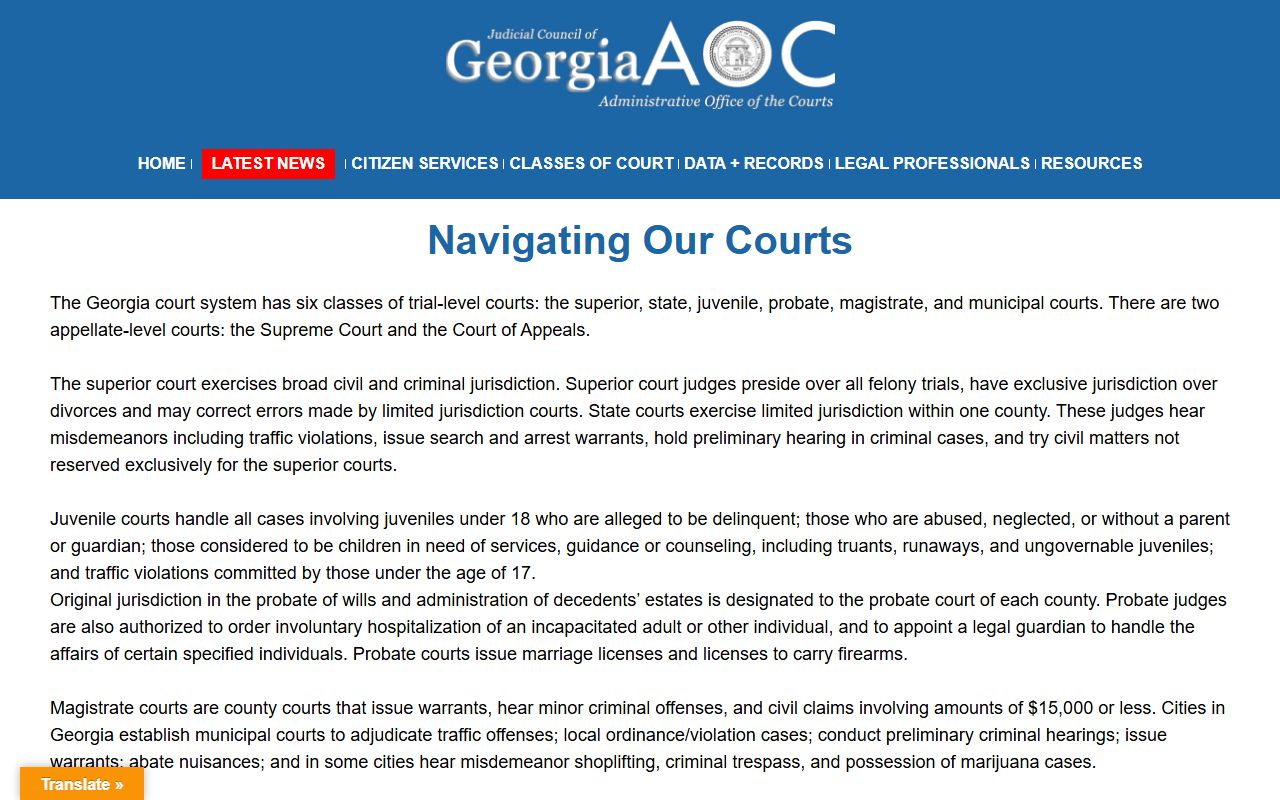
The statewide structure matters because users coming from another state may search for a district court, but Chattahoochee County records are organized around Georgia's Superior, Probate, Magistrate, Juvenile, and related court classes.
Chattahoochee County Court and Office Table
Chattahoochee County's court ecosystem is compact. The main courthouse offices are concentrated at 379 Broad Street in Cusseta, while the Sheriff's Office is nearby at 377 Broad Street and the jail is listed by GDC at 379 Broad Street. Official sources did not identify separate numbered Superior Court divisions in Chattahoochee County, so the useful table is a court-and-office routing table rather than a numbered district-court list.
| Court or Office | Local Role | Address | Phone |
|---|---|---|---|
| Chattahoochee County Superior Court | Felony, divorce, broad civil, appeals or review from lower courts; served by Clerk Tami Wade | 379 Broad Street, P.O. Box 120, Cusseta, GA 31805 | 706-989-3424 |
| Juvenile Court | Juvenile matters with clerk service through Tami Wade; access is restricted by confidentiality rules | 379 Broad Street, Cusseta, GA 31805 | 706-989-3424 |
| Magistrate Court | Small claims, garnishments, dispossessories, warrants, first appearances, and preliminary matters; Judge Johnny Floyd listed | 379 Broad Street, Cusseta, GA 31805 | 706-989-3643 |
| Probate Court | Marriage licenses, weapons-carry licenses, vital records, misdemeanor traffic, estates, guardianships, oaths, and elections | 379 Broad Street, Cusseta, GA 31805 | 706-989-3603 |
| Sheriff's Office and Jail | Arrests, jail, incident reports, local criminal-history checks, and sheriff open records | 377 Broad Street and 379 Broad Street, Cusseta, GA 31805 | 706-989-3644 |
| Chattahoochee Judicial Circuit District Attorney | Felony prosecution for the circuit | Government Center, 100 10th Street, Columbus, GA 31901 | 706-653-4336 |
The Chattahoochee Judicial Circuit District Attorney page gives the circuit prosecution contact in Columbus. That prosecutor office is separate from the Chattahoochee County Clerk of Superior Court, which maintains the local court file.
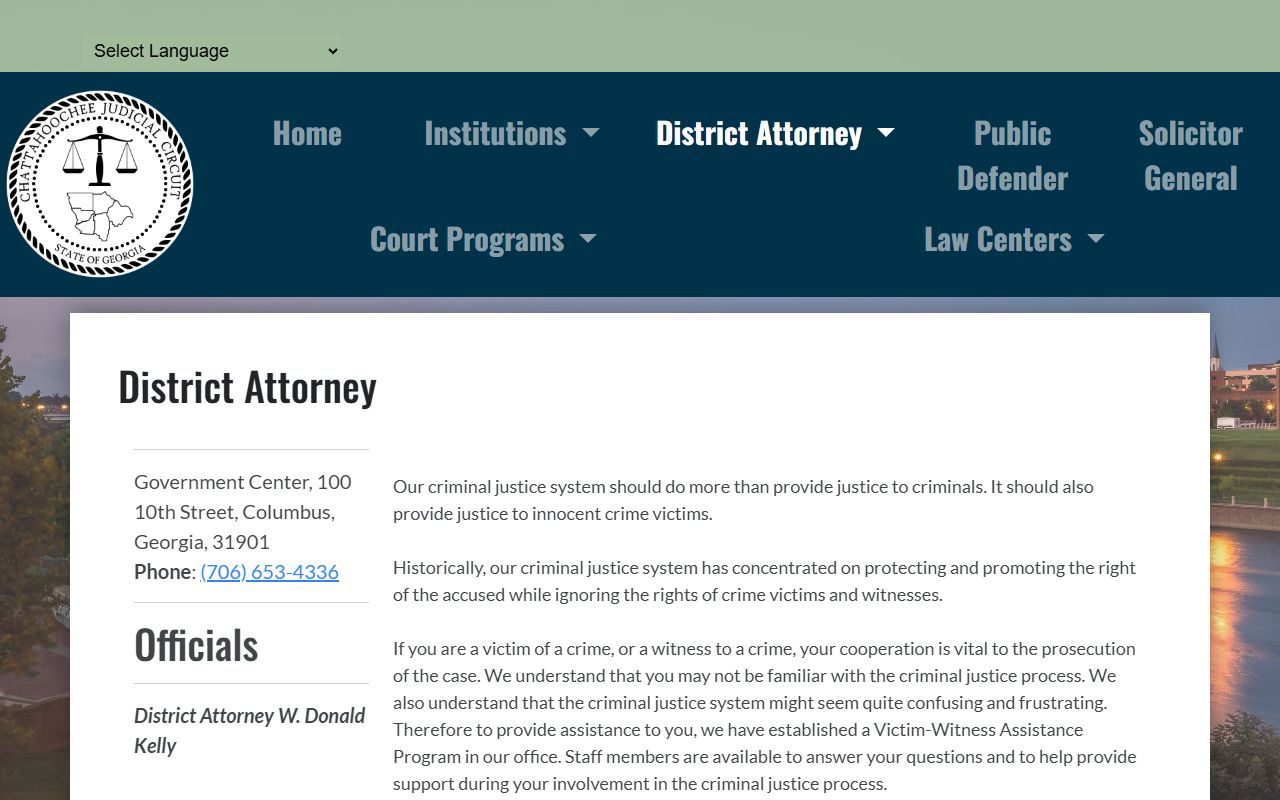
The District Attorney may appear in criminal Superior Court cases, but requests for certified court documents should still go to the clerk or approved certification channel.
Superior Court vs. Probate, Magistrate, and Juvenile Courts
Georgia does not use the Texas-style "County Court vs. Justice Court" comparison for Chattahoochee County. The practical comparison is Superior Court against the lower Georgia trial courts and county offices that handle limited matters. Use this distinction before calling the clerk, because a divorce decree and a misdemeanor traffic citation may both involve a courthouse but route to different offices.
| Topic | Superior Court | Probate Court | Magistrate Court | Juvenile Court |
|---|---|---|---|---|
| Main civil role | Broad civil jurisdiction, domestic cases, divorce, injunctions, major filings | Estates, wills, administrations, guardianships, vital records, licenses | Small civil claims, dispossessories, garnishments, personal-property foreclosure | Child-related cases governed by juvenile confidentiality |
| Criminal role | Felony cases and related criminal proceedings | Misdemeanor traffic court in Chattahoochee County | Warrants, first appearances, and preliminary criminal matters | Delinquency and other juvenile proceedings |
| Record contact | Clerk of Superior Court, 706-989-3424 | Probate Court, 706-989-3603 | Magistrate Court, 706-989-3643 or clerk contact for filings | Clerk contact, but access is restricted |
| Public access limits | Sealed files, redactions, juvenile material, protected identifiers, and restricted criminal records | Guardianship, mental-health, adoption, minor, and vital-record eligibility limits | Sealed warrants, restricted identifiers, and active-investigation limits | Juvenile confidentiality limits general public access |
How a Case Moves Through the Chattahoochee County System
Case flow depends on the record type. A felony matter may start with a sheriff arrest and magistrate first appearance before moving into Superior Court for indictment, arraignment, motions, plea, trial, sentencing, or appeal. A divorce or civil case usually starts with a petition or complaint filed through the clerk, followed by service, answer, motions, hearings, discovery, settlement, trial, judgment, and post-judgment activity.
Criminal flow: Arrest or warrant › Magistrate first appearance or preliminary matter › District Attorney charging decision › Superior Court indictment or accusation where applicable › arraignment › motions and calendar settings › plea or trial › sentencing › appeal or post-conviction steps.
Civil and divorce flow: Complaint or petition filed with the Clerk of Superior Court › filing fee and service › answer or default period › temporary hearings or motions › discovery and settlement efforts › trial or final hearing › judgment or decree › certified copies, enforcement, modification, or appeal.
Traffic and probate flow: Citation, application, will, estate, guardianship, or license request › Probate Court intake › fee and eligibility review › hearing, certificate, license, letters, order, disposition, or court date › certified copy or follow-up filing if available.
Civil, Family, and Criminal Divisions
Superior Court is the court to identify when a Chattahoochee record involves a felony, divorce, broad civil claim, domestic modification, garnishment in Superior Court, or review from a lower court. The clerk's 2024 fee notice groups civil, domestic, modifications, and garnishments at a $213 filing fee and lists divorce filings at $213. Those fees are clerk filing fees, not fines or final judgment amounts.
Criminal Superior Court files may include indictments or accusations, arraignment records, bond orders, motions, plea paperwork, trial calendars, sentencing documents, probation conditions, and dispositions. The local clerk calendar page posts dated criminal-trial calendars, but a calendar is only a schedule and not the full case file. Public access may also be limited by sealed orders, pending-investigation concerns, protected identifiers, and Georgia record-restriction rules.
Family and domestic Superior Court records include divorce petitions, decrees, parenting plans, custody and support orders, financial affidavits, contempt matters, and modifications. The Georgia court hierarchy gives Superior Court exclusive jurisdiction over divorces. Some domestic records may contain financial account numbers, minor information, protected addresses, or sealed filings that cannot be treated as fully open documents.
Judicial Circuit / District
The Chattahoochee Judicial Circuit Superior Court bench listed in the research includes Chief Judge J. Arthur L. Smith, Judge Bobby G. Peters, Judge Gil McBride, Judge Maureen Gottfried, Judge John T. Martin, Judge Ben Richardson, and Judge Carolyn C. Burch. Governor Kemp's May 17, 2024 release says Carolyn "Tippi" Cain Burch was appointed to serve as a Superior Court judge in the Chattahoochee Judicial Circuit and Don Kelly as District Attorney.
The Prosecuting Attorneys' Council listing identifies William Donald Kelly, Jr. as District Attorney for Chattahoochee, with a Columbus mailing address and phone 706-653-4336. Victim-witness contacts are organized by advocate and judge assignment through the circuit District Attorney's office. Those contacts are for prosecution and victim services, not for obtaining a certified copy of a court file.
The Prosecuting Attorneys' Council listing is a direct way to verify the DA office tied to Chattahoochee Superior Court cases. It should not be confused with the clerk's case-record function.
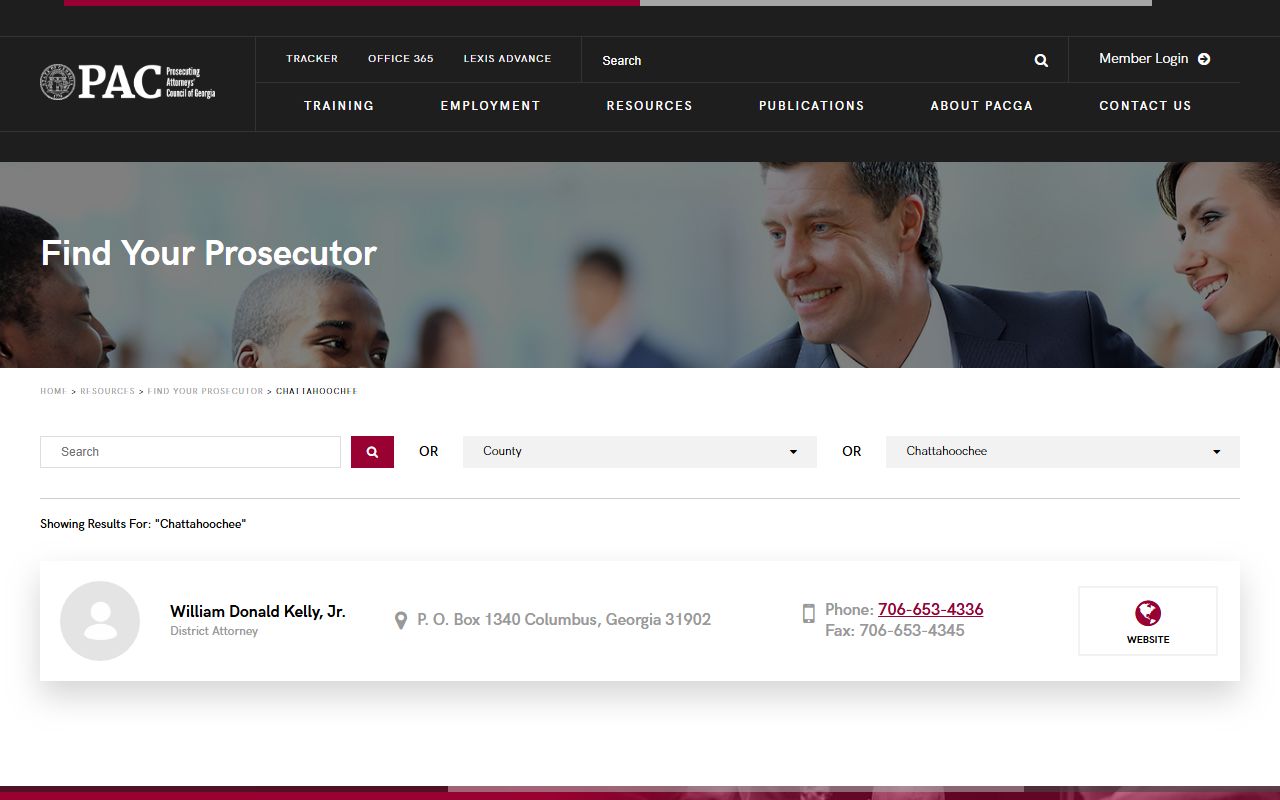
The prosecutor listing helps identify the criminal-case office, while docket entries, filings, and certified copies remain court-record functions.
Magistrate and Lower Courts
Magistrate Court, Probate Court, Juvenile Court, and any municipal court where a city has one are lower or limited-function courts in the Georgia hierarchy. Magistrate Court handles small civil claims, dispossessories, garnishments, warrants, first appearances, and preliminary hearings. Chattahoochee County lists Judge Johnny Floyd for Magistrate Court and gives 706-989-3643 as the magistrate phone on the county page.
Probate Court is unusually important in this county because it administers misdemeanor traffic court as well as wills, estates, guardianships, marriage licenses, vital records, weapons-carry licenses, oaths, and elections. That means traffic citation questions should not automatically be sent to Superior Court. Probate Court's local phone is 706-989-3603.
Federal courts are separate. Chattahoochee County's federal trial-court matters generally route through the U.S. District Court for the Southern District of Georgia, with bankruptcy in the U.S. Bankruptcy Court for the Southern District of Georgia and appeals to the U.S. Court of Appeals for the Eleventh Circuit. Federal cases use PACER and the PACER Case Locator, not the Chattahoochee County Clerk of Superior Court, GSCCCA, PeachCourt, or Odyssey eFileGA.
The U.S. District Court for the Southern District of Georgia is the federal trial-court source for federal cases that are not county Superior Court records. The screenshot below is included because the manifest assigns federal-court context to this Superior Court page.
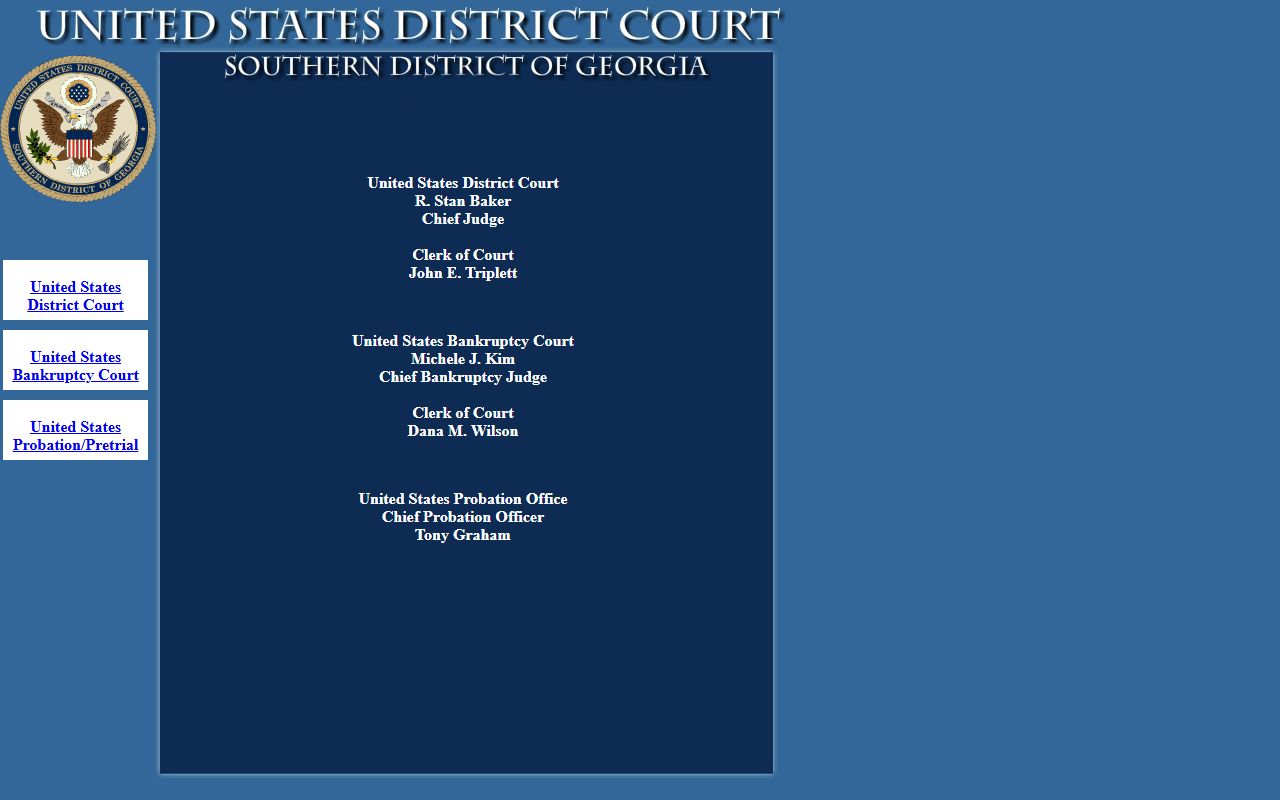
Federal docket access through PACER is independent of the county courthouse in Cusseta. A felony prosecuted by the Chattahoochee Judicial Circuit DA and a federal criminal prosecution in the Southern District of Georgia are different record systems.
The DA victim-witness contact page lists advocates by judge assignment and role for the Chattahoochee Judicial Circuit. Those contacts support victims in criminal cases but do not replace the clerk's record-copy process.
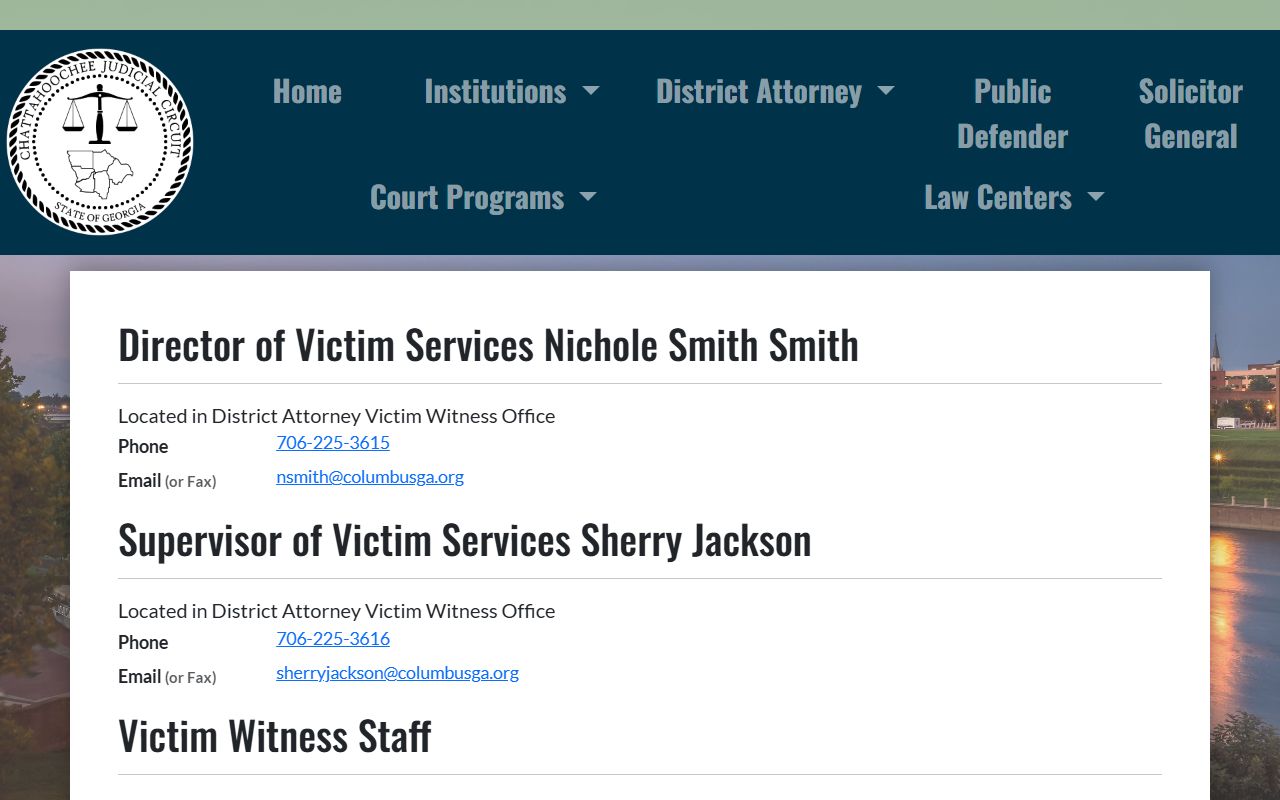
Victim-witness services can help with prosecution-related communication, while public calendars, case files, and certified copies still need the court or clerk channel.
The manifest also assigns CourtListener federal docket context to this page. CourtListener can be useful as a free legal-research alternative for some federal opinions and dockets, but it is not the official Georgia county court record or the official federal docket.
For official federal filings, use PACER or the federal court. For Chattahoochee County Superior Court filings, use the local clerk, calendars, eFiling tools, or eCertification as documented by the clerk.